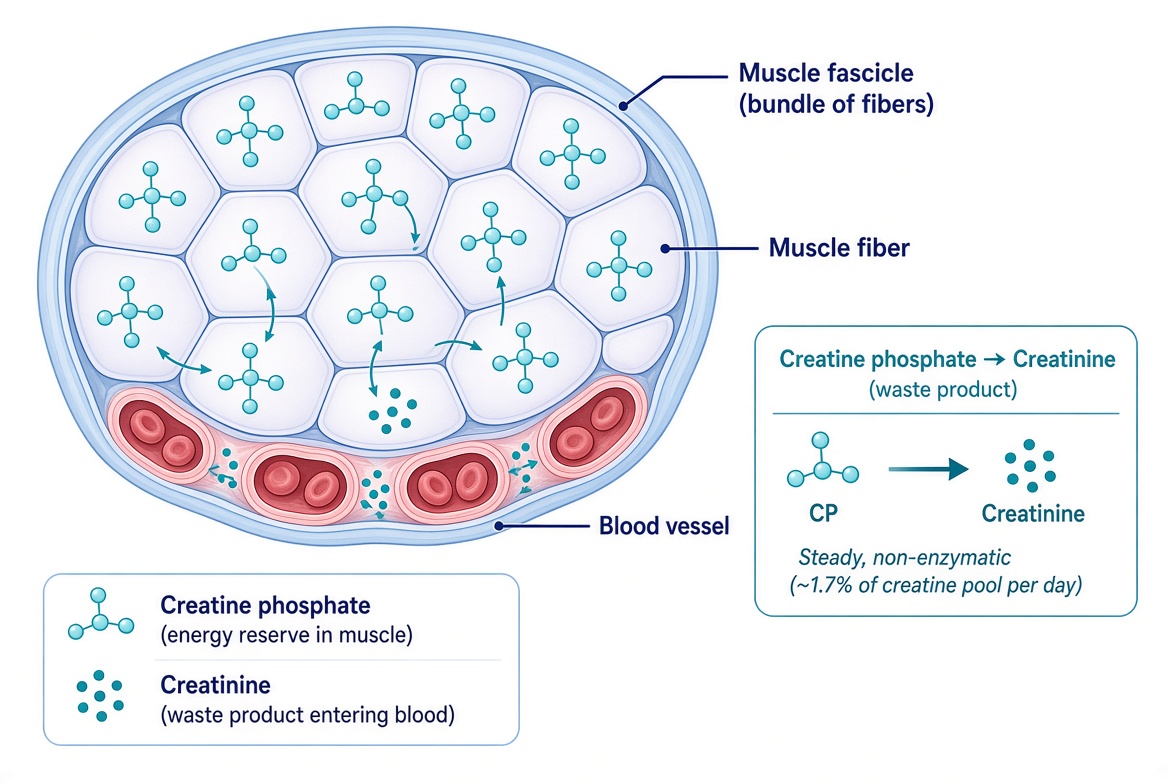
Kidney function is most commonly measured by a substance called creatinine, a molecule that is the end product of creatine metabolism in the muscles. Because creatine degrades into creatinine at a steady rate, the amount of creatinine a person makes each day is proportional to their muscle mass. (To be clear, CREATINE is the energy-rich molecule used by muscles; CREATININE is the muscle waste product.)
AI-generated illustration.
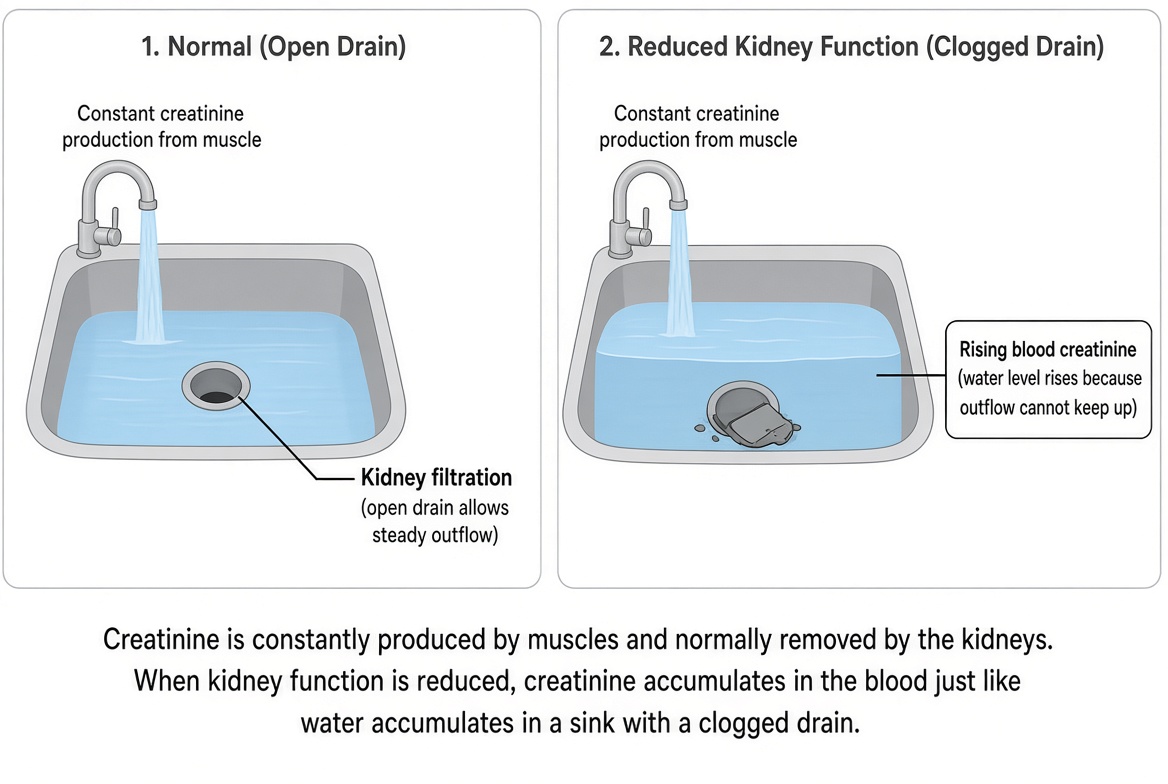
The kidneys filter creatinine into the urine. Because muscles release creatinine into the bloodstream at a fairly constant rate, and healthy kidneys clear it at a constant rate, blood creatinine levels are a widely used marker of how well your kidneys are cleaning your blood. When the kidneys aren’t filtering well, creatinine rises not because muscles produce more creatinine, but because less is removed from the bloodstream.
It’s like using the water level in a sink to tell how clogged or unclogged the drain is. If you have a constant amount of water coming out of a faucet, you could tell if your drain is clogged by seeing how high the water level rises as the clog worsens.
AI-generated illustration.
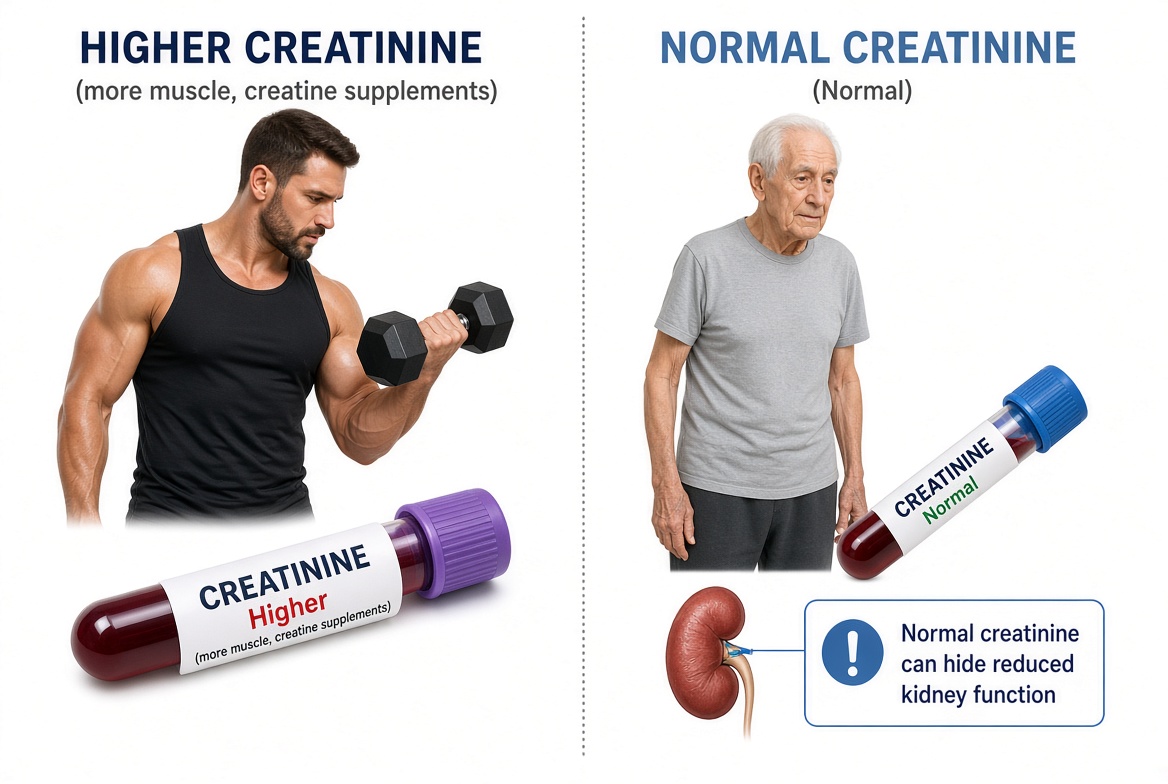
- However, bodybuilders and people using creatine supplements make more creatinine, and often their blood creatinine levels will make their kidneys look worse than they are.
- A frail 85-year-old with diminished muscle mass makes very little creatinine, so even a “normal” creatinine can hide kidneys working at reduced capacity.
- You can lose a third to half of your kidney filtering capacity before blood creatinine starts to rise.
AI-generated illustration.
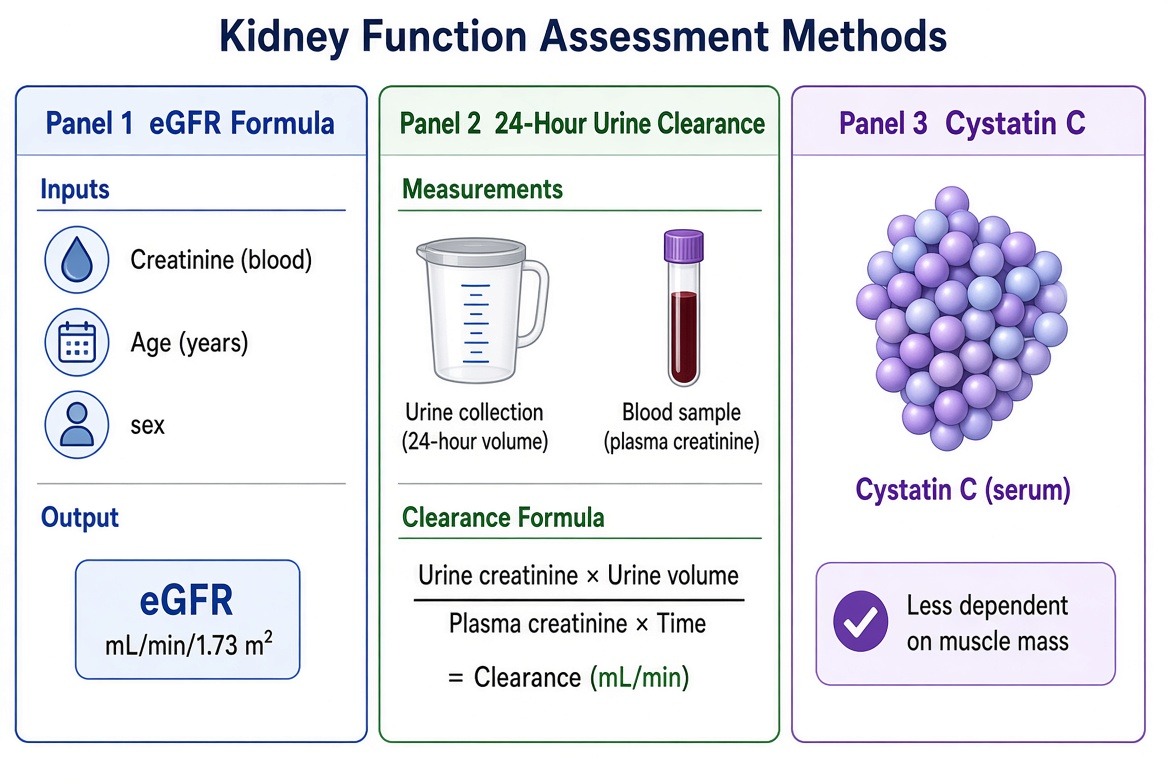
Clearly, blood creatinine is imperfect, but it is cheap and widely available. As such, we kidney folks use several other tests to more precisely understand a person’s kidney filtering ability.
Most lab reports now include an estimated GFR (eGFR), calculated from creatinine, age, and sex, which serve as stand-ins for average muscle mass.
We can collect 24-hour urine studies, which allow us to compare someone’s blood creatinine level to their urine creatinine output. It is a more direct measure of one person’s kidney function, but hard to do well, since it means urinating into a jug for a full day.
And in more recent years, we can check a second marker, cystatin C, a small protein made by nearly every cell in the body at a steady rate, largely independent of muscle. (Of course, cystatin C has its own measurement quirks; thyroid disease, steroids, and inflammation all alter it.)
AI-generated illustration.
Ultimately, there is no perfect way to measure the kidneys’ function, but there are lots of ways to estimate it and, of course, the real value is following these data over time to watch for change.